Press Kit
Searching for Afunakwa
A film tracing the path of a lullaby from a remote indigenous community to the global music industry, and the silence that followed.
OVERVIEW
Searching for Afunakwa is a documentary and music project that traces the little-known origins of one of the most recognisable pieces of “world music” of the 1990s — Sweet Lullaby by Deep Forest — and shines a light on the singer, people and culture from which it came.
BACKGROUND
In 1969, an ethnomusicologist recorded a Baegu lullaby sung by a woman named Afunakwa in a remote region of the Solomon Islands. More than two decades later, that recording was sampled and transformed into a global hit, selling millions of copies and appearing in films, advertisements, and viral videos — while Afunakwa, her family, and her community were largely unacknowledged and did not share in the success that resulted from it.
The film is told from the perspective of musician and composer Matt Singmin (SOLON), whose attempt to remix the Rorogwela recording led him to uncover a long trail of ethical concerns and unresolved issues. When clearance efforts raised troubling questions about consent and ownership, Singmin travelled to the Solomon Islands to seek answers — and a way to reconnect the song with its origins.
Through first-hand testimony from her grandchildren and local leaders, Searching for Afunakwa restores voice, context, and meaning to a song that became detached from its origins. The film explores not only what was taken, but what was misunderstood: a lullaby about orphanhood and loss, repurposed as an upbeat anthem for a global audience.
Along the way, the documentary examines prior unsuccessful attempts by outsiders — journalists and well-meaning visitors — to “put things right,” revealing how good intentions can still perpetuate harm when truth, accountability, and cultural understanding are absent.
The film culminates with the idea to establish the Afunakwa Foundation, a community-led initiative designed to ensure that future engagement with the song — artistic, academic, or commercial — is ethical, transparent, and benefits the community directly.
At its core, Searching for Afunakwa is a story about truth — and its often long journey to being recognised. It asks what responsibility artists carry when music moves between cultures — and whether it is ever too late to acknowledge past mistakes and put them right.
THE DOCUMENTARY
Title: Searching for Afunakwa
Runtime: 47 minutes
Status: Forthcoming
Director: Matt Singmin
Featuring: Clement Iata, Tony Kwaomae, Celsus Talifilu, Matt Singmin
Filmed on location in the Solomons Islands
Searching for Afunakwa Trailer - Private Link / Embed
Searching for Afunakwa — Full Documentary
The complete film is provided for press and industry who wish to view the film:
Searching for Afunakwa - Full Documentary - Private Vimeo Link
For full background and credits: Searching for Afunakwa — Overview
THE MUSIC
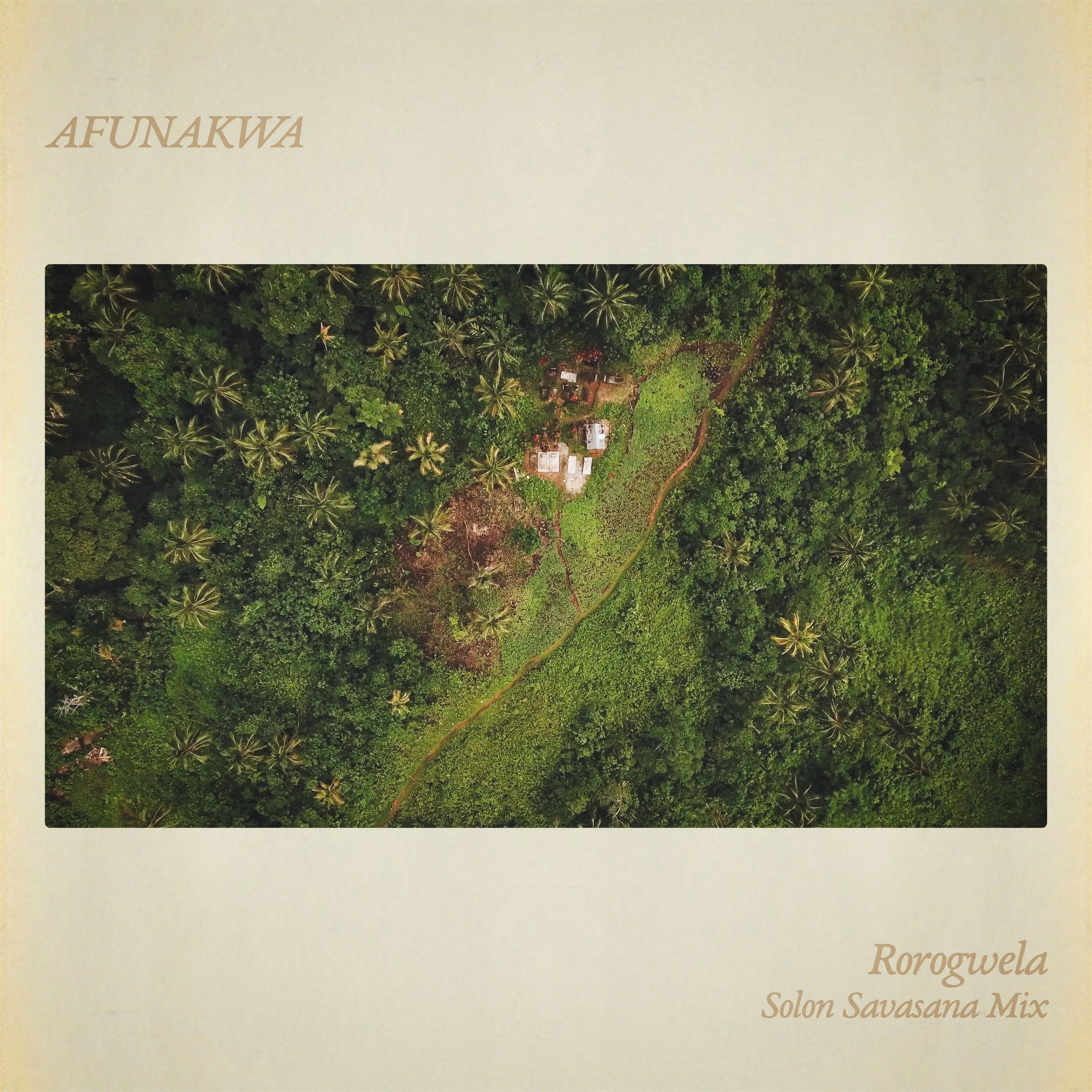
track details
Track title: Rorogwela (SOLON Savasana Mix)
Length: 5 mins 32 seconds
Vocal performance: Afunakwa
Original recording: Hugo Zemp
Production, mixing, and mastering: Matt Singmin
Proceeds destination: The Afunakwa Foundation
about the track
Rorogwela (SOLON Savasana Mix) is a re-imagining of a traditional lullaby sung by Afunakwa, a woman from the Baegu region of Malaita in the Solomon Islands. In the early 1990s the song became widely known through its use in Sweet Lullaby by the French band Deep Forest.
While that version introduced the melody to a global audience, the intimacy of the vocal — and the meaning of the song — were somewhat obscured in the process. Singmin’s intention was to bringing Afunakwa’s voice back into focus, allowing the nuances and emotional weight of the performance to be felt more directly. The result is a spacious, meditative re-contextualisation that seeks to honour the spirit of the original song while offering an ambient journey designed to support stillness, reflection, and savasana.
For full background and credits: Rorogwela (SOLON Savasana Mix) — Overview
audio track — private soundcloud embed
MUSIC VIDEO — private vimeo embed
why this matters
Sweet Lullaby continues to circulate globally today on streaming platforms and social media. Yet the questions surrounding its origin remain unresolved more than 30 years later.
In contrast to many contemporary debates around cultural appropriation, which centre on general stylistic borrowing, the case of Sweet Lullaby centres on the direct use of a specific voice from a specific place. A traditional lullaby from a specific community and sung by a named woman, was lifted from its original context and recirculated globally, while the singer herself, the song’s origins, and its meaning were largely absent from what followed — making this a clear and unresolved example of cultural appropriation rather than a contested or theoretical one.
Similarly, if as research has suggested, no evidence exists that permission was ever granted to use the original recording (Steven Feld 2000), the case also raises unusually clear copyright questions. Unlike high-profile disputes such as Blurred Lines or recent Ed Sheeran cases, which hinge on stylistic resemblance or subjective musical similarity, this concerns the use of a specific, identifiable source recording — and whether it was ever licensed at all.
The project also presents an opportunity for journalism and cultural media to play a constructive role — to bring visibility to an unresolved piece of music history and create the conditions for conversation, response, and possible repair. Rather than closing the story, the film and music mark the opportunity for a new beginning. At a time when greater visibility and cultural understanding exist, the conditions are more conducive than ever to address issues left unresolved for decades.
QUOTES
“What began as a simple remix evolved into a much larger story. Once I understood the history, I couldn’t simply release the track and move on — I had to find another way. Everything that followed — the journey to the Solomon Islands, the documentary, the foundation — was the result of that search.”
— Matt Singmin, SOLON
“Of course we are happy a voice from our place is enjoyed by people out there — as music always be. But please recognise that it was from this humble beginning that this thing came about.”
— Celsus Talifilu, son of Baegu Headman Saverio Talifilu
“Deep Forest should acknowledge who is the singer, who is the owner of the song. Acknowledgement is very important.”
— Tony Kwaomae, Grandson of Afunakwa
”The truth always channel itself to the light. Do you want to hide the truth — the truth always come out to the light.”
— Clement Iata, Grandson of Afunakwa
“The story doesn’t end here. There remains an opportunity for acknowledgement and repair. This project is about creating the conditions for dialogue and resolution — and recognising that it’s not too late.”
— Matt Singmin, SOLON
ABOUT THE ARTIST / FILMMAKER
SHORT BIO
Matt Singmin, known as SOLON, is an English musician and DJ based in Sydney, Australia. He creates immersive electronic music for meditation and deep listening — from hypnotic techno to dream-like ambient compositions. Further to re-imagining the Rorogwela recording, he shifted into filmmaking as a way to honour the song’s origins, and give voice to the people from where it came.
LONG BIO
Matt Singmin, known as SOLON, is an English musician and DJ based in Sydney, Australia. He creates immersive electronic music for meditation, yoga, and deep listening — from hypnotic techno to dream-like ambient compositions.
His early releases (Datta, Oed und Leer Das Meer, Phlebas) were composed for savasana, the final resting state at the end of a yoga practice. Drawing on vintage synthesizers and traditional orchestration, the music was designed to support the transition from movement into stillness, inviting breath and brainwaves to slow, thought to soften, and the psyche to drift.
These works emerged from Singmin’s time DJing yoga events as one half of The Future Sound of Yoga, an experience for which he re-imagined the Rorogwela lullaby, a recording which was popularised in the early 1990s through its use in Sweet Lullaby by Deep Forest. When clearance efforts uncovered a long trail of ethical concerns, Singmin travelled to the Solomon Islands to seek answers.
Confronted with the complexity of the unresolved issues, he shifted into filmmaking as way of honouring the song’s origins and giving voice to the people from where it came. The result is Searching for Afunakwa, a documentary which asks what responsibility artists carry when music moves between cultures — and whether it is ever too late to acknowledge past mistakes and put them right.
PRESS ASSETS
Press images — filmmaker & participants
Documentary stills — images from filming on location
Cover artwork — documentary + EP
Documentary trailer — download video file
Music video — download video file
All assets cleared for editorial use with credit.
CONTACT
Email: matt@solonmusic.com
Location / Timezone: Sydney, Australia (AEST/AEDT)
Availability: Available for interviews (remote or in-person)